Automated Content Research Tools for SEO Teams 2026
Byline wrote this one end to end, picked the keyword, and filed it here over the same rail a customer’s site is published to. Every figure links to the page it was taken from. If one of them does not check out, that is the product failing in public, which is the point of publishing this way.

Content teams can spend hours collecting keywords, checking competitor pages, and sorting search intent, then still publish a page that answers the wrong question. That fragmented process creates a costly delay between an emerging audience need and a useful article.
Automated content research matters because content decisions require more than a list of phrases. Readers expect direct answers, while publishers need a repeatable way to connect topics, intent, and page requirements. When research remains scattered across spreadsheets and browser tabs, teams risk duplicate coverage, weak topical connections, and unnecessary manual work. It also makes editorial judgment harder to apply consistently at scale.
Automated content research uses software and trusted data sources to identify search topics, assess intent, group related queries, and define the expected output for each page. For Byline, the process supports automated high ranking SEO content by turning research signals into structured content opportunities without repetitive manual collection.
What Separates the Good From the Rest
The better options turn scattered search signals into an editorial decision that a team can explain and act on. Weak options produce a long topic list, then leave people to determine relevance, evidence, search intent, and the next creation step.
Automation must preserve judgment. It should remove unnecessary steps from discovery and organization without treating a keyword, a competitor page, or a generated outline as proof that a subject deserves publication. The useful output is a defensible brief: audience need, search intent, supporting questions, trusted data sources, and a defined expected output for the writer.Volume is not enough.
A product also needs a clear boundary. Jasper describes itself as an AI writing platform for marketing teams seeking brand consistent text at scale, which places its public positioning at the creation stage. A Semrush interface presents content ideas as suggestions that may help increase organic traffic and directs users to inspect the ideas attached to a page, making it more explicitly connected to topic opportunity review (the Semrush prompt says these ideas may help increase organic traffic).
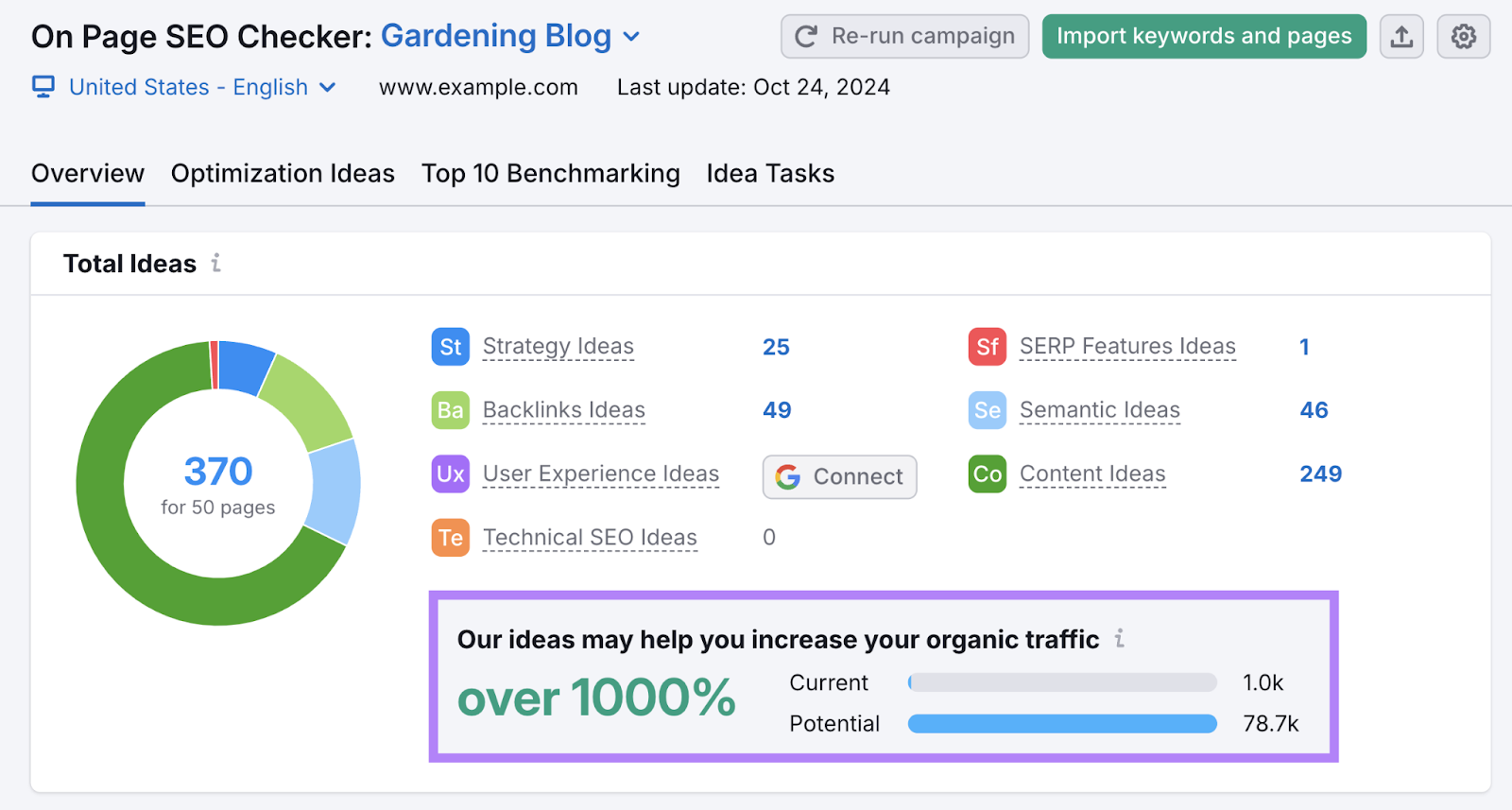
That difference matters because automated content research is not a search for the largest possible idea inventory. It is an effort to identify subjects where a site can contribute something specific, accurate, and commercially relevant before production begins.
What is automated content?
Automated content is material assembled, drafted, formatted, or distributed with software assistance rather than completed entirely by hand. Creation comes later. Research automation should instead collect candidate questions, classify themes, expose gaps, and prepare inputs for editorial review.
This is the wrong choice when the assignment requires original reporting, legal interpretation, medical guidance, or a subject where the available evidence is thin. In those cases, use domain specialists, primary documentation, and direct interviews instead of relying on generated suggestions. The costly delay is not gathering fewer ideas, it is publishing an answer that cannot withstand scrutiny.
Top Picks at a Glance
Byline, Semrush, and Jasper suit different parts of the automated content research workflow. The strongest choice depends on whether the priority is autonomous SEO publishing, topic discovery, or brand controlled marketing copy.Byline for Autonomous SEO Content Creation
Byline is automated high ranking SEO content generated for websites, built for website owners and marketers who want autonomous SEO, content creation, editorial standards, AI tools, and CMS integration in one operating model. Its strongest case is for teams that need research to progress into published website content without maintaining separate systems for ideation, drafting, editorial control, and delivery.Choose Byline when output matters.
It fits marketers who want to define the expected output, maintain editorial standards, and remove unnecessary steps between an identified search opportunity and a useful page. It is not the right choice when an article depends on proprietary evidence, original interviews, or regulated subject expertise. In those cases, use primary documentation and domain specialists before publishing.
Semrush for Search Opportunity Discovery
Semrush is useful when the immediate task is locating content gaps and prioritising pages that warrant deeper investigation. Its content ideas interface includes a “# ideas” control beside individual pages, making it suited to marketers building a research queue from existing URLs.Semrush surfaces opportunities. It does not replace editorial judgment about intent, evidence quality, or whether a proposed topic deserves publication.
Jasper for Brand Controlled Marketing Copy
Jasper serves marketing teams that need brand consistent text content at scale. It belongs on the shortlist when the research process already exists and the principal requirement is turning approved briefs into messaging aligned with established brand conventions.The distinction is concrete: Semrush helps identify potential topics, Jasper focuses on producing marketing text, and Byline is oriented toward automated SEO content creation for websites. Readers seeking automated article topic research should map that requirement to the point of friction in their process, then select the product that addresses it rather than adding another disconnected tool.
Detailed Breakdown
The tools separate by where they remove work. Byline makes the strongest case for teams that need content production to follow an SEO operating model rather than stop at a list of possible ideas.
Byline for autonomous SEO content production
Byline is automated high-ranking SEO content generated for websites, built around autonomous SEO, content creation, editorial standards, AI tools, and CMS integration for website owners and marketers. Its value is in reducing the handoffs between planning an editorial direction and publishing content that follows defined standards. That matters when a marketing team needs a repeatable content engine, not another workspace that creates research notes requiring manual production.
It suits website operators with a clear acquisition goal. They should define the expected output, editorial requirements, and publishing process before adding automation. This approach makes automated content research useful only when it feeds a publishing workflow, rather than becoming an expanding collection of unassigned topics.
Semrush for finding opportunity areas
Semrush is the better fit when the immediate problem is identifying where a site could publish next. Its content ideas interface says users can select the # ideas control next to a page to inspect recommendations intended to support organic traffic growth, as shown in Semrush’s topic-idea interface.
That is a different job. Semrush surfaces research prompts, while Byline is oriented toward turning SEO content requirements into website content. A team that lacks topic direction should start with opportunity research, then decide whether its production process creates a costly delay.
Jasper for marketing copy requirements
Jasper presents itself as an AI writing platform for marketing teams that need brand-consistent text content at scale. It is appropriate where campaign messaging, brand voice, and marketing copy are the primary requirements. It is not the natural first choice for a website owner seeking an autonomous SEO content system with CMS integration.
The wrong choice is using Byline when the team only needs a narrow topic list or campaign copy draft. Use Semrush for topic discovery, or Jasper for marketing text, then remove unnecessary steps before selecting the system that will carry content into publication.
How to Choose the Right One
Choose by the decision the system must support. For automated content research, that usually means deciding whether the immediate need is topic opportunity, marketing copy, or a controlled editorial workflow.
Start with the required output
Define the expected output before comparing interfaces. A search team may need a defensible topic cluster with search intent, while a campaign team may need draft messaging that reflects an established brand voice. Those are separate operating requirements, even when both begin with the same seed phrase.
Semrush is appropriate when the output is a set of search-led content opportunities. Its topic research material presents idea pages as inputs that may help increase organic traffic by over 1000%. Jasper positions itself as an AI writing platform for marketing teams needing brand-consistent text at scale, so it fits a different point in the content process.
The distinction matters. Topic discovery should not be judged by copy generation alone.
Check the evidence path
A useful system should show how a suggested subject connects to the search need it is intended to meet. Teams should inspect whether the output exposes the query, competing pages, subtopics, intent signals, and the assumptions behind prioritisation. If researchers cannot trace a recommendation back to trusted data sources, the tool may produce a persuasive list without providing a publishable rationale.
This is especially important when several stakeholders approve briefs. An editor needs enough context to reject a weak idea quickly, while an SEO lead needs a repeatable method for deciding which gaps deserve production capacity.
Know when not to automate
This is the wrong choice when the assignment requires original reporting, legal interpretation, regulated advice, or a point of view drawn from interviews. Use subject specialists, primary documents, and editorial review instead, because automated research can organise available signals but cannot establish facts absent from its inputs.
The practical objective is not a longer list of topics. It is a shorter route from search demand to a credible article brief, without creating a costly delay in review.
What to Watch Out For
Watch for unsupported recommendations, opaque inputs, and systems that mistake generated ideas for evidence. Automated content research fails when a team needs verified subject matter expertise, primary reporting, or a defensible factual record rather than a starting point for editorial planning.
Generated topics are not evidence. A model can identify repeated phrases, adjacent questions, and apparent gaps, yet it cannot establish whether a claim is current, accurate, or appropriate for the audience. Editorial teams still need trusted data sources, first party documentation, and a named reviewer for assertions that affect legal, medical, financial, or technical decisions.
The tool’s input matters as much as its output. A broad prompt such as “write about payroll software” can produce an attractive but unfocused cluster of angles, while a defined audience, geography, product category, and search intent create a research brief that can be assessed against real business priorities.
What are the top 5 automation tools?
A top five list can conceal meaningful differences. Semrush presents an interface where users can open the number of ideas attached to a page, and its screen says those ideas may help increase organic traffic by over 1000%. That is an optimization prompt, not proof that a proposed article deserves publication.
Jasper describes itself as an AI writing platform for marketing teams seeking brand consistent text at scale. This separates it from a page oriented idea interface on one concrete axis: one publicly frames its role around producing marketing copy, while the other presents page level ideas. Neither description removes the need to validate demand, source quality, and competitive relevance.
Treat screenshots cautiously. A polished topic board may show suggestions without revealing the query set, freshness of the data, or why one angle outranks another. Ask whether the system can define the expected output, such as a prioritized brief with source requirements and exclusion criteria, before it generates a long list.
This is the wrong choice when the assignment depends on original interviews, proprietary customer knowledge, or a small set of high stakes pages where editorial judgment outweighs speed. In those cases, use manual research, direct customer conversations, and subject matter review instead of workflow automation.
Related: Blog: BylineWhat is automated content
Automated content is material produced or prepared through software rules, AI models, or both. In this context, automated content research means software gathers, organizes, and prioritizes signals that help determine what an article should cover before drafting begins.
The output is not necessarily a finished article. It may be a topic cluster, a search intent classification, a list of recurring questions, a content brief, or an outline grounded in ranking pages and trusted data sources. The practical objective is to remove unnecessary steps from early research without treating machine generated suggestions as editorial decisions.
How automation differs from automated writing
Research automation identifies possible subjects and evidence patterns. Writing automation converts those inputs into prose.
Jasper presents itself as an AI writing platform for marketing teams seeking brand consistent text at scale, which places it primarily on the production side of the workflow. By contrast, a Semrush interface presents ideas that may help increase organic traffic, making topic discovery and optimization opportunities the more relevant function here. One creates draft language. The other helps define the expected output.
That distinction matters because a strong article can begin with weak research. A system may surface popular queries, competing page structures, and related entities, yet it cannot reliably determine whether the available evidence is current, credible, or sufficiently specific for a reader’s decision.
When automated research is the wrong choice
This approach is the wrong choice when accuracy depends on unpublished company information, original reporting, legal interpretation, clinical guidance, or direct interviews. Those assignments require primary documents, qualified reviewers, and conversations with the people closest to the subject.
It also fails when the search result is misleading. A high volume phrase can describe several different needs, while an automated suggestion may collapse them into one article and create a costly delay during editing. Human judgment must decide the audience, verify claims, and reject topics that do not support the publication’s editorial purpose.
For SEO articles, automation should accelerate discovery, not replace source evaluation.
Related: Autonomous SEO Content Creation: Top Tools for 2026How to use AI for content research
Use AI to turn a research brief into a prioritized topic set. Then make the machine sort evidence, not certify it.
For automated content research, define the expected output before entering a prompt: a topic cluster, search intent, audience question, competing pages, source requirements, and an editorial decision. Start with a research brief. Write the audience, publication goal, product context, prohibited claims, and the question each article must answer.
Collect inputs from search results, internal site data, customer conversations, and trusted data sources. AI can group repeated questions, identify related entities, surface gaps between existing pages, and turn scattered notes into candidate briefs. It should also label uncertainty, especially when a source lacks a publication date, author, methodology, or direct evidence.
Use separate tools for discovery and drafting
In Semrush, the interface directs users to click the # ideas control beside a page to inspect topic ideas, which makes it useful for moving from an existing URL to adjacent search opportunities. This is a page and query discovery task, not a substitute for validating whether the proposed topic fits the site.
Jasper describes itself as an AI writing platform for marketing teams that need brand consistent text content at scale. Its stated focus is text production, whereas Semrush’s cited interface focuses on exposing ideas associated with a page. The distinction matters because topic discovery should happen before a draft is requested, otherwise a polished article can be built around a weak premise.
Turn suggestions into editorial decisions
AI should produce options, not publishable conclusions. Ask it to rank topics by audience relevance, intent clarity, evidence availability, and overlap with existing content, then require a reason for every ranking.
A candidate topic fails when it has no credible sources, duplicates a stronger page, or attracts visitors who cannot use the publication’s expertise. This is the wrong choice when the assignment depends on original reporting, legal interpretation, medical guidance, or proprietary customer knowledge. Instead, interview subject matter experts, review primary documents, and record the evidence trail before drafting.
Keep human review in the loop. That is how automated research for SEO articles becomes a repeatable process for finding worthwhile topics rather than a system for generating more unverified ideas.
What are the top 5 automation tools
The five tools worth placing on an automated content research shortlist are Semrush, Jasper, Simular, Canva, and Byline. They serve different points in the workflow, from identifying candidate subjects to turning an approved brief into a publishable asset.
Semrush identifies page-level topic opportunities
Semrush’s Topic Research interface shows an ideas control beside a selected page. That makes it useful when the research task begins with an existing URL, competing result, or established subject area rather than a blank prompt. Semrush starts with search opportunity signals.
Jasper supports the writing handoff
Jasper describes itself as an AI writing platform for marketing teams seeking brand-consistent text at scale. Its place is after researchers have defined the expected output, audience, source requirements, and angle. It is not a substitute for confirming whether a suggested topic has credible evidence or a viable search intent.
This distinction matters. Semrush surfaces possible directions from pages and ideas, while Jasper handles text production after the direction has passed editorial review.
Simular and Canva handle adjacent research tasks
Simular’s published interface image should be reviewed against the team’s required inputs before it enters a repeatable process. The useful question is whether its interface captures the sources, constraints, and decision criteria that a content team needs recorded. Canva’s published product image belongs in the shortlist where topic research also needs a visual brief or asset direction. That use case differs from keyword discovery, even when both activities sit inside one editorial workflow.

Byline completes the five names, with its dedicated evaluation covered elsewhere in this article.
This is the wrong tool category when the assignment requires original interviews, proprietary customer data, legal verification, or technical validation. In those cases, use subject matter experts and trusted data sources first, then apply workflow automation to organize the evidence and remove unnecessary steps.
Frequently Asked Questions
Q: How to use AI for content research?Use AI for content research by entering a target topic, audience, and search intent, then asking it to cluster related questions, summarize trusted data sources, and identify content gaps. Define the expected output, such as a keyword list, outline, competitor themes, or source table. Verify every factual claim against primary sources before publication.
Q: What is an example of automated data collection?An example of automated data collection is a workflow that gathers search suggestions, related questions, ranking pages, and recurring terms for a target keyword into a spreadsheet or database. The system can refresh those inputs on a schedule, helping content teams identify topic changes and remove unnecessary steps from manual research.
Final Thoughts
Automated content research produces better editorial decisions when it combines trusted data sources, clear search intent, and workflow automation that removes unnecessary steps. The priority is not collecting more topics, but defining the expected output, identifying commercially relevant gaps, and moving qualified ideas into production before competitors act. Choose a platform that fits the team’s publishing process, connect its research signals to the content calendar, and start converting validated opportunities into pages that support revenue.